
How many restrooms do you need for a wedding or event?
Guest count is where sizing starts. It is not where it ends, and the difference is usually the thing that causes a queue.
· Restroom Ranch, Westfield, Indiana
The short answer
Start with guest count, then adjust. A Restroom Ranch 3-station trailer comfortably serves up to 225 guests and a 5-station serves up to 300, with the 2-station suited to smaller, more intimate gatherings. Those figures assume a normal event. Four things push you toward the next size up: an event running longer than about four hours, alcohol being served, a guest list weighted toward women, and a multi-day booking. Any two of those together and we would size up rather than leave you short. The cost of going one size larger is a few hundred dollars. The cost of getting it wrong is a line of guests outside the nicest thing at your venue, which is the one detail people remember.
Step one: start with the guest count
These are the capacities we quote against, published rather than kept behind a form.
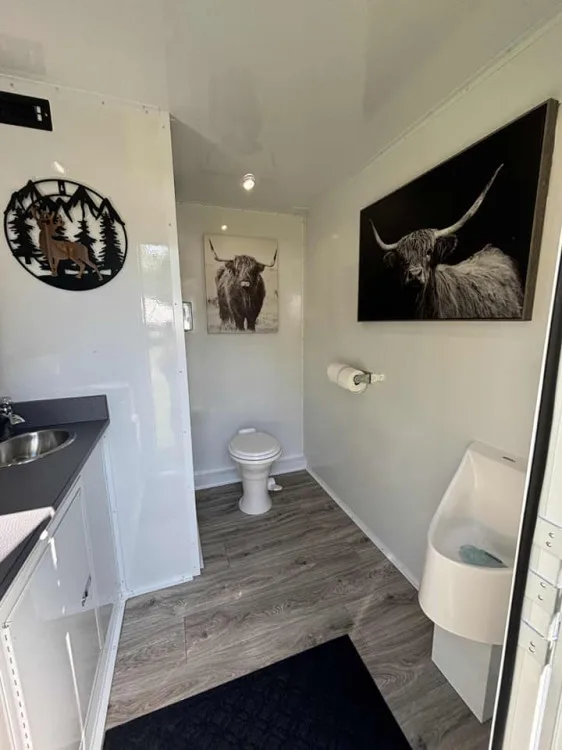 Smaller gatherings
The 2-Station
Showers, rehearsal dinners, backyard parties and intimate weddings
from $1,420 per event
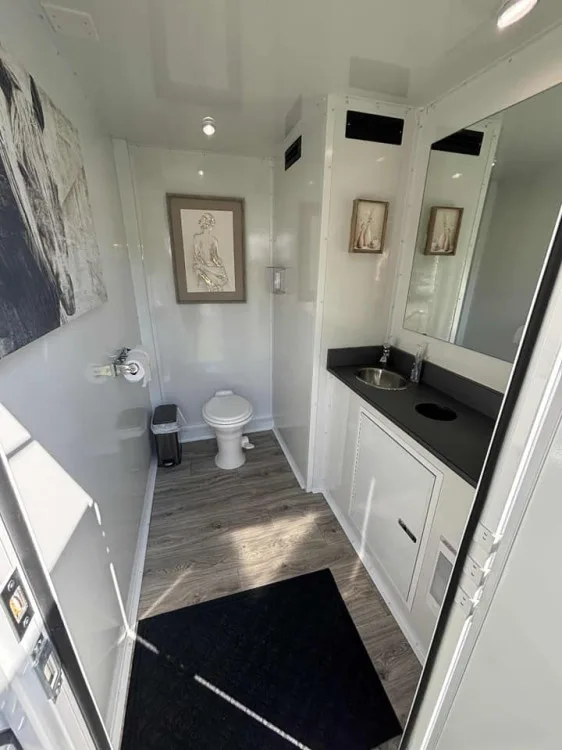 Up to 225 guests
The 3-Station
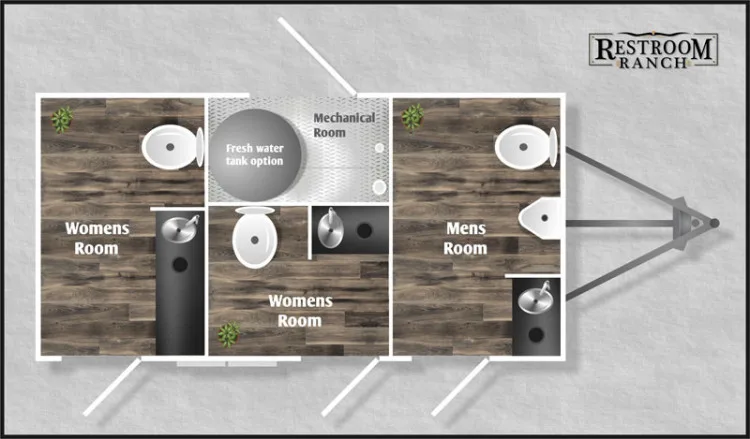
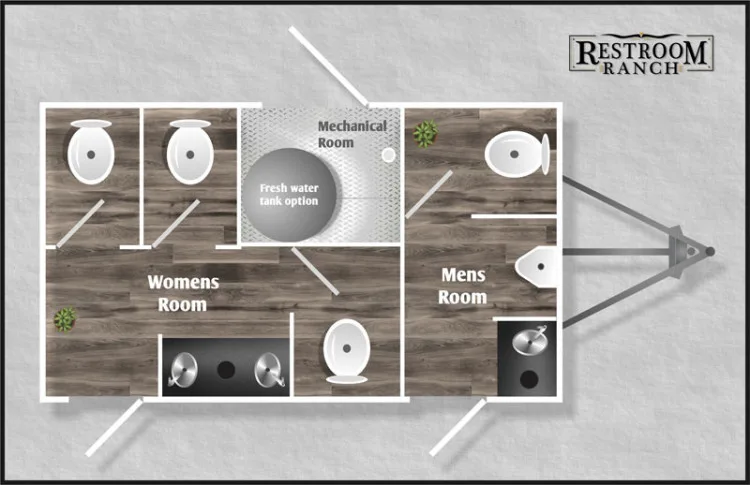
The size most weddings land on, with separate men's and women's suites
from $1,749 per event
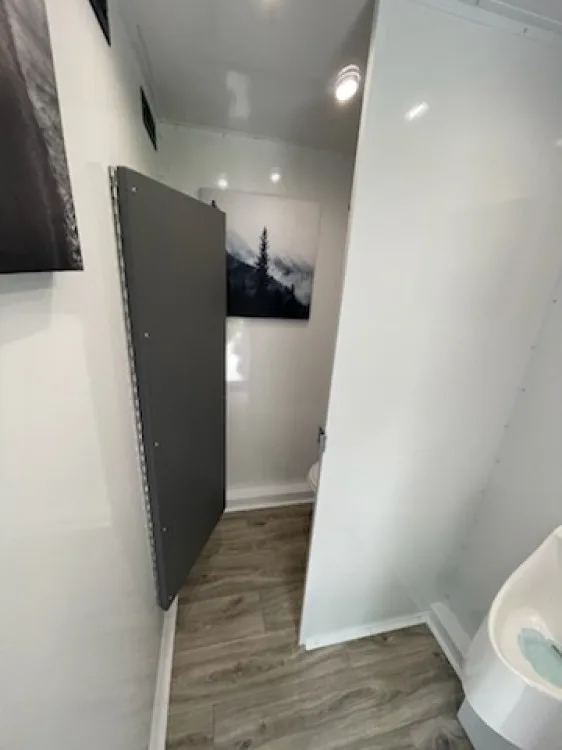 Up to 300 guests
The 5-Station
Large weddings, galas and festivals, with five suites across two wings
from $2,199 per event
Step two: the four things that move it
Guest count sets the floor. These decide whether you sit on it or move up.
How long the event runs
A two-hour ceremony and a seven-hour reception with dinner and dancing put very different loads on the same trailer. Past about four hours, treat your guest count as though it were larger than it is.
Whether alcohol is served
This is the single most underestimated factor, and the one people are most reluctant to be honest about on a planning call. An open bar materially increases restroom traffic across the whole event. Tell us, and we will size accordingly.
Who is attending
We ask what proportion of guests are women because it changes the balance of stalls to urinals that serves your crowd best. A bridal shower and a golf outing with the same headcount are not the same sizing problem.
Single day, overnight or multi-day
Multi-day bookings need a servicing plan, not just a bigger unit. Festivals and long-term job sites are sized around the servicing schedule as much as the peak crowd.
Three worked examples
What we would actually recommend, and why. These are our recommendations, not an industry standard.
120 guests, backyard wedding, five hours, beer and wine
The 3-Station. On headcount alone a smaller unit looks defensible, but five hours plus alcohol is exactly the combination that produces a queue at the worst possible moment. The separate men's and women's suites also matter more at a wedding than at most events, because everyone tends to move at once between the ceremony and dinner.
200 guests, barn venue reception, seven hours, open bar
The 5-Station, even though 200 sits inside the 3-Station's published range. Seven hours and an open bar are two upward factors stacked together, and barn venues frequently place the trailer further from the dancing than anyone expects. Paying roughly $450 more here buys throughput at exactly the hour it gets tested.
300 guests, daytime corporate festival, no alcohol
The 5-Station, sitting right at its published capacity. A dry daytime event with people arriving and leaving in waves rather than all at once is the profile that capacity figure assumes. If the same event ran into the evening or added a bar, we would talk about a second unit rather than stretching one.
What undersizing actually looks like
It rarely shows up early. The trailer looks generous at hour one and the problem appears in a single concentrated window: straight after the meal, or when the bar has been open long enough. That is when a queue forms, and a queue outside a restroom at a wedding is not a minor inconvenience. It pulls people off the dance floor and it is the thing guests mention afterwards.
The asymmetry is worth sitting with. Moving from the 3-Station to the 5-Station is a difference of $450 on a wedding that has probably cost tens of thousands. Almost nobody who sized up has regretted it. We have taken plenty of calls from people who sized down.
- Count the peak, not the average
- Be honest about the bar
- Place it close enough that people will use it
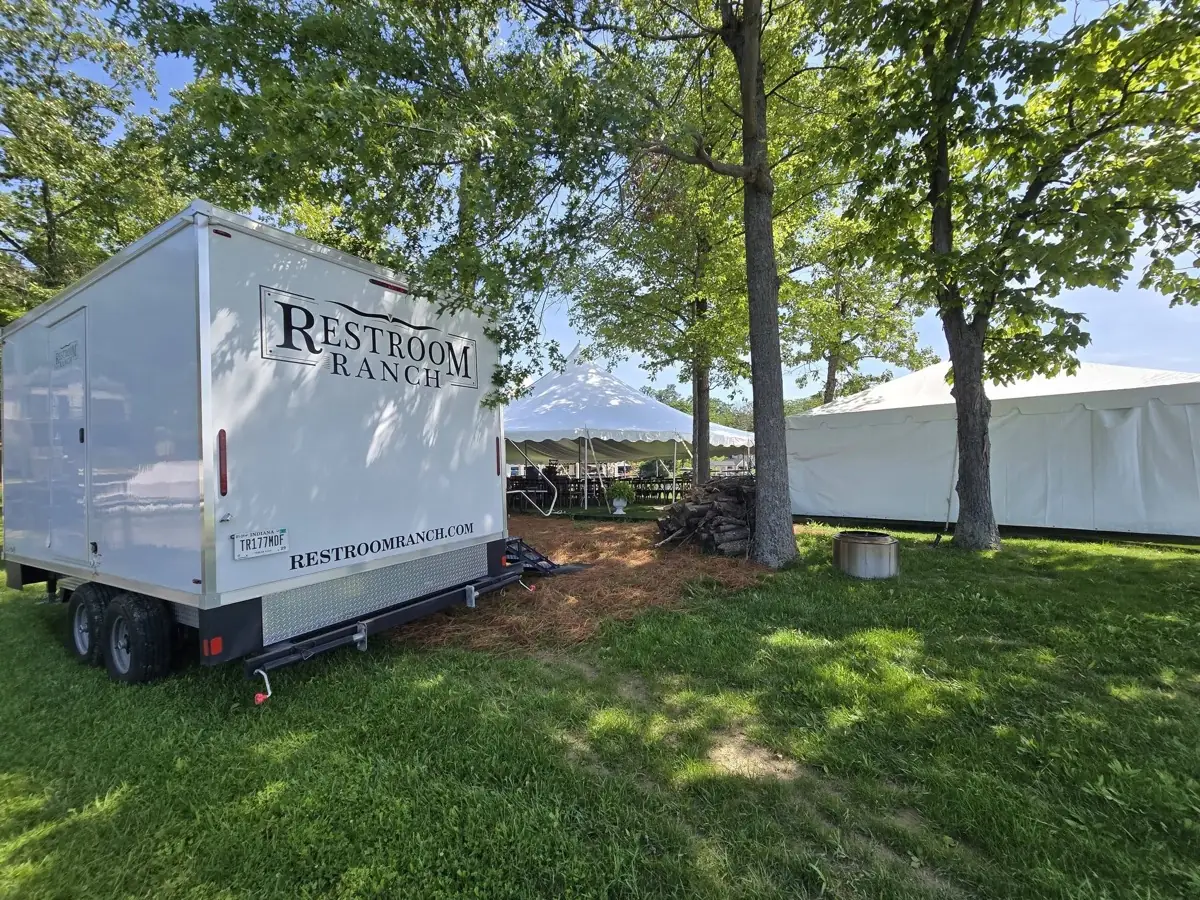
Where it goes matters as much as how big it is
A correctly sized trailer placed too far from the action behaves like an undersized one, because guests hesitate before making the walk and then all go at once. Close enough to be obvious, far enough to be private, is the balance to aim for.
The site itself needs firm level ground, about five feet of clearance around the unit, nothing overhead, and an outlet within roughly 100 feet for units that draw power. We cover placement in more detail in our guide to what a luxury porta potty actually is and what it costs.
If you are hosting in a public park, the venue will usually require a shelter reservation or an event permit, which comes from the city or parks department rather than from us.
Questions people ask next
How many guests can one restroom trailer handle?
Our 3-Station comfortably serves up to 225 guests and our 5-Station up to 300. The 2-Station suits smaller, more intimate gatherings. Event length, alcohol and guest mix can all move you to the next size up.
Does serving alcohol change how many restrooms I need?
Yes, materially. It is one of the questions we ask on every planning call, because an open bar increases restroom traffic across the whole event. It is the most common reason we recommend sizing up from what the headcount alone would suggest.
Do I need two trailers instead of one bigger one?
Sometimes. Above roughly 300 guests, or when a venue is spread out enough that one location cannot serve everyone conveniently, two units placed apart usually beat one large one. Tell us the layout and we will say which we would do.
Are the trailers wheelchair accessible?
Our current trailers are not ADA accessible. We partner with other companies whose ADA trailers we can bring in, so tell us early if accessibility is a requirement and we will arrange it.
What does it cost?
$1,420 for the 2-Station, $1,749 for the 3-Station and $2,199 for the 5-Station, per event. Delivery, professional setup and pickup are included in every quote. Final pricing depends on date, duration and location.
Let us size it for you
Send the date, the headcount, the hours and whether there is a bar. We will tell you which trailer we would put on it, and what it costs all-in.