
Renting a porta potty for a party at home: do you need one?
When the house bathroom stops coping, what your septic system has to do with it, and what a trailer needs at your house.
· Restroom Ranch, Westfield, Indiana
The short answer
For a dinner party, your own bathroom is fine. A graduation party or a family reunion in the backyard is a different load: guests there all afternoon, one or two bathrooms inside the house, and a steady line walking through your kitchen to reach them. If the house is on a septic system, that line is also sending a lot of water into the tank in a short window, which the EPA warns can harm the system.
A rental moves all of that outside. A standard porta potty is the budget option, at $80 to $175 a day according to Fixr’s cost guide. A restroom trailer gives guests a flushing toilet, a sink with hot and cold water, lighting and heat or air conditioning, and keeps them out of your house. Ours start at $1,420 per event, with delivery, setup and pickup included.
Signs the house bathroom will not be enough
Any one of these is a reason to think about a rental. Two or more and we would book one.
The party runs for hours
An open house from noon to six is a very different load from a two-hour dinner, even with the same number of people on the list.
The party is outside, the bathroom is not
Every trip means shoes through the kitchen and guests wandering upstairs looking for a second bathroom.
You are on a septic system
A crowd of guests concentrates a lot of flushing and hand washing into one afternoon. More on that below.
You would rather keep people out
Bedrooms and medicine cabinets sit behind those doors, and plenty of hosts simply prefer that the party stays in the yard.
The septic question
Worth two minutes if your house is not on city sewer.
The EPA’s guidance on caring for a septic system is plain about timing. “All the water a household sends down its pipes ends up in its septic system,” and the agency advises spreading laundry across the week rather than doing it all in one day, because a big surge “will not allow your septic tank enough time to treat waste and could flood your drainfield.”
A party does the same thing a laundry day does: it sends far more water through the house than normal, in a few hours. The EPA puts typical indoor use at as much as 70 gallons per person per day in a single-family home, and your guests are adding to that on top of your household.
A restroom trailer takes that load off the house entirely. Its waste goes into the trailer’s own holding tank, which holds 300 gallons on our 2-Station, 400 on the 3-Station and 520 on the 5-Station, and it leaves with the trailer at pickup. Nothing your guests flush goes into your system. Read the EPA’s full guidance if you want the detail.
What a trailer needs at your house
Walk the property with this list a few weeks out. The power, water and size figures come from our own product listings.
A firm, level spot
A flat stretch of driveway often works better than a lawn that looks flat but is not. A steep one will not work. Allow about five feet of clearance around the trailer.
A way in from the road
The 2-Station is 17 feet long and the larger two are just under 20, with a truck in front. Check gates, mailboxes, tight turns and low branches between the street and the spot.
Two circuits within 100 feet
The trailer plugs into standard 120-volt, 20-amp outlets or 12-gauge extension cords, and it needs two separate circuits. Two outlets on the same breaker count as one. For a winter party, the heat package needs a separate 50-amp circuit.
An outdoor spigot, if you have one
The listings ask for a water source within 100 feet. Without one, the trailer runs from its onboard tank: 105 gallons on the 2-Station and 200 on the larger two.
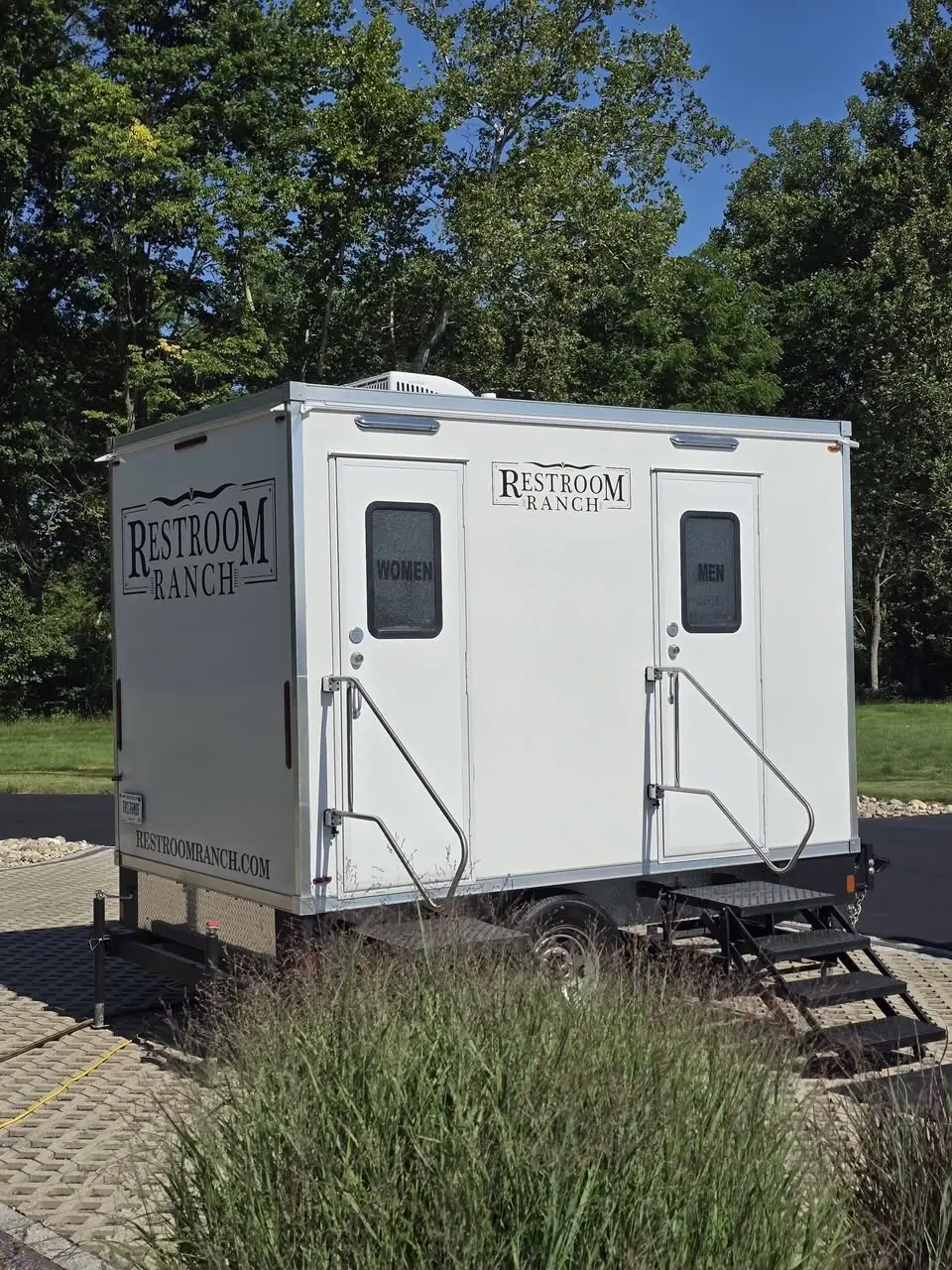
Neighbors, the HOA and the street
On your own property you usually need no permit. If the only level spot is on the street, that is public right-of-way, and the question goes to the city before it comes to us. Our permit guide covers who to ask.
If your neighborhood has an HOA, read its rules on trailers and temporary structures before you book, and tell the neighbors when it arrives and when it leaves. We deliver ahead of your start time so the trailer is leveled, stocked and staged before your first guest arrives, and we handle takedown afterwards, so it is on your driveway for the party and not much longer.
Which kind, and which size
A standard porta potty makes sense for a casual cookout where cost matters more than comfort. It needs no power or water, so it can go at the back of the yard. We do not rent them; a sanitation company does. For a larger event with a mix of guests, our guide to porta potties for events covers when to use both.
A restroom trailer makes sense when grandparents are coming, when guests are dressed for photos, when the party runs into the evening, or when it is cold. Our 2-Station, with one women’s and one men’s room, is the size we suggest for backyard parties. Bigger gatherings move up to the 3-Station, which comfortably serves up to 225 guests, and our sizing guide explains when to go larger.
Book early for a Saturday. The weekends between May and October are the dates that go first, and graduation weekends are among them.
Questions people ask next
Do I need a porta potty for a party at my house?
Not for a short dinner party. A rental earns its place when the party runs for hours, when guests are outside and the bathrooms are inside, when the house is on a septic system, or when you would rather keep guests out of the house. Two or more of those and we would book one.
Can a party overload my septic system?
The EPA advises against sending a large amount of water into a septic system at once, because the tank needs time to treat waste and a surge could flood the drainfield. A long party with many guests does exactly that. A restroom trailer keeps the load off the house, because its waste goes into its own holding tank and leaves with the trailer.
How much does a porta potty rental for a party cost?
Fixr’s cost guide puts a one-day rental of a standard porta potty at $80 to $175. Restroom Ranch trailers start at $1,420 per event for the 2-Station, with delivery, professional setup and pickup included.
Does the trailer connect to my house?
Only for power and, if you have one, an outdoor spigot. It plugs into two separate 120-volt, 20-amp circuits within 100 feet, and it draws water from a source within 100 feet or from its onboard tank. Nothing connects to your drains or septic system.
Where should the trailer go?
On firm, level ground with about five feet of clearance around it and nothing overhead. A level section of driveway often works better than a lawn. Call us about the spot before the day: we would much rather solve placement on the phone than in your driveway on the morning of the party.
Do I need a permit to put a restroom trailer at my house?
On your own property you usually do not. If the trailer would sit on the street, check with the city first, because that is public right-of-way. If you have an HOA, read its rules on trailers before you book.
Check your date and your driveway
Send the date, the address, the guest count and where you would put it. We will tell you if the spot works and what it costs, all-in.